little lives in the lands between

When Elden Ring finally released in February 2022, my main concern was not looking like a poser. At that point in my life I had known the Souls games by reputation but not experience; some part of me chafed at the idea of jumping on the bandwagon without having an appreciation for how monumental this release was for fans of the franchise. This is, of course, a ridiculously silly thing to be concerned about. Nothing needs to be proven to anyone to enjoy a game. Play whatever looks cool. Nevertheless, in the years between then and now, I worked my way from Boletaria to Lothric and further still to the Ringed City before finally deeming myself worthy to enter the Lands Between. I do think my experience with Elden Ring shown brighter because I took this scenic route. ER is in so many ways the ultimate culmination of Fromsoft's ludography, and past exposure to their design language makes the twists in this game all the more enjoyable.
The prior Souls games, Dark Souls 1 especially, do a phenomenal job at selling the idea of a world without having the scale to deliver it fully. Take for example the Darkroot Garden or Irithyll of the Boreal Valley. In concept, the Garden is an acres-spanning forest with fog and shadows concealing mossy roots; Irithyll is a gothic wintry castle town nestled between mountains, narrow streets illuminated by lamplight and terminating in cathedrals; it is lived in to the degree that there is a jail and sewage system. These two regions deliver their concept by focusing on the highlights: the player visits a ghost-infested stretch of the gnarled wood and walks over the central bridge through the main courtyard up to one cathedral of Irithyll. They showcase a judicious handful of set pieces to stimulate the imagination while eliding the minute details that would have been needed to make the fantasy truly real.
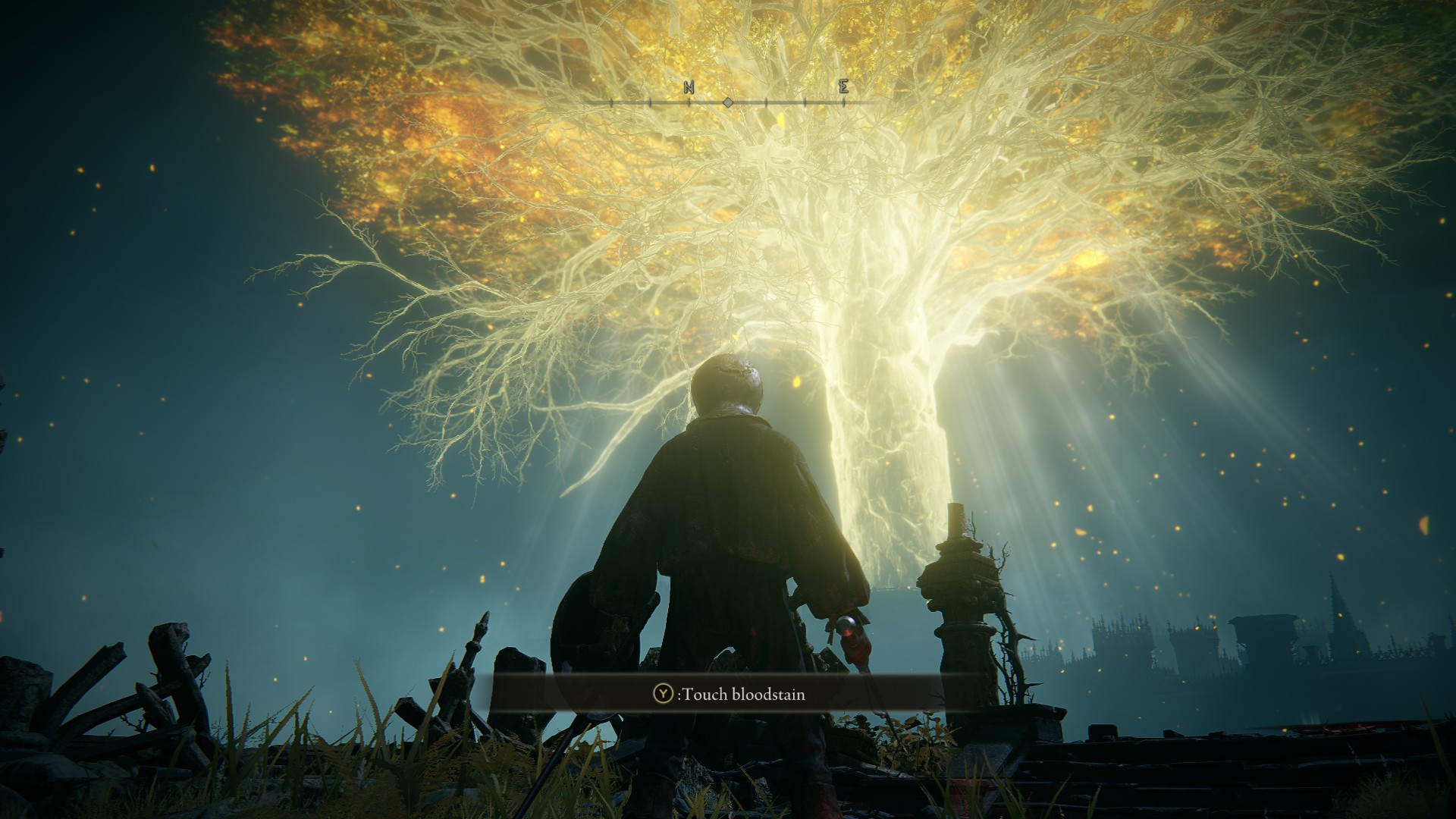
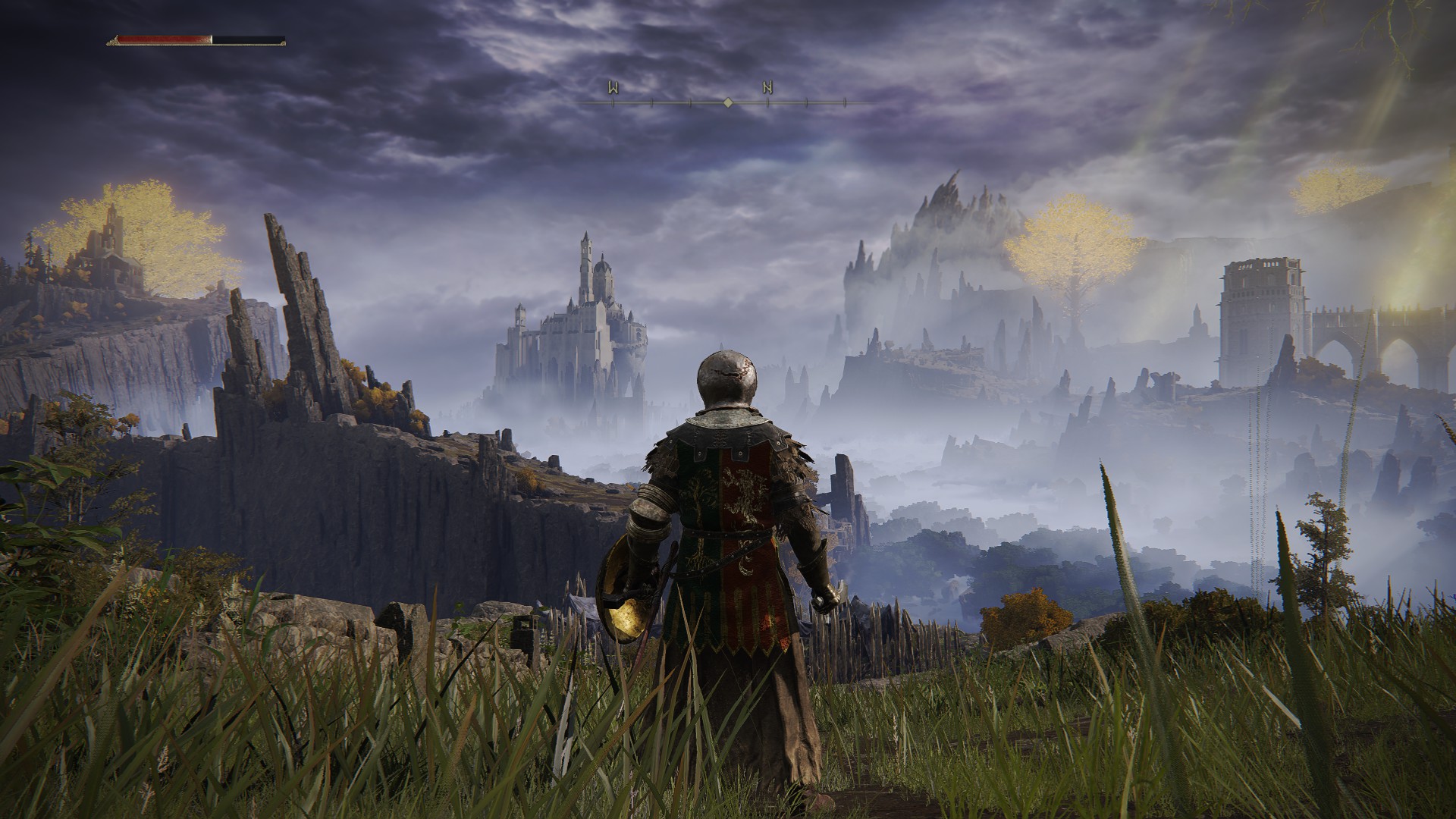
Elden Ring makes the fantasy real. It elides nothing in its depiction of the varied territories of the Lands Between. It gives the highlights as prior games did-- as well as the interstice. Each area has its Legacy Dungeon, massive fortifications that make up an area's primary objective, act as a centerpiece. These Legacy Dungeons would often be sufficient to make up entire areas of themselves in prior Souls games. Look to the Academy of Raya Lucaria in Liurnia of the Lakes as the example here. The half-submerged castle town and the Academy itself would serve perfectly in scale and scope as an environment in a game past. Liurnia is not made up of the Academy and the surrounding town, however. It is make up of the fog-laden lakebed enclosed by plateaus and plagued villages hiding within the shadows of cliffs. The Academy can be tackled by walking at it head on, moving linearly from the end of Limgrave through to the Academy. However, there is a left and a right, an up and a down. There is a full land to explore.
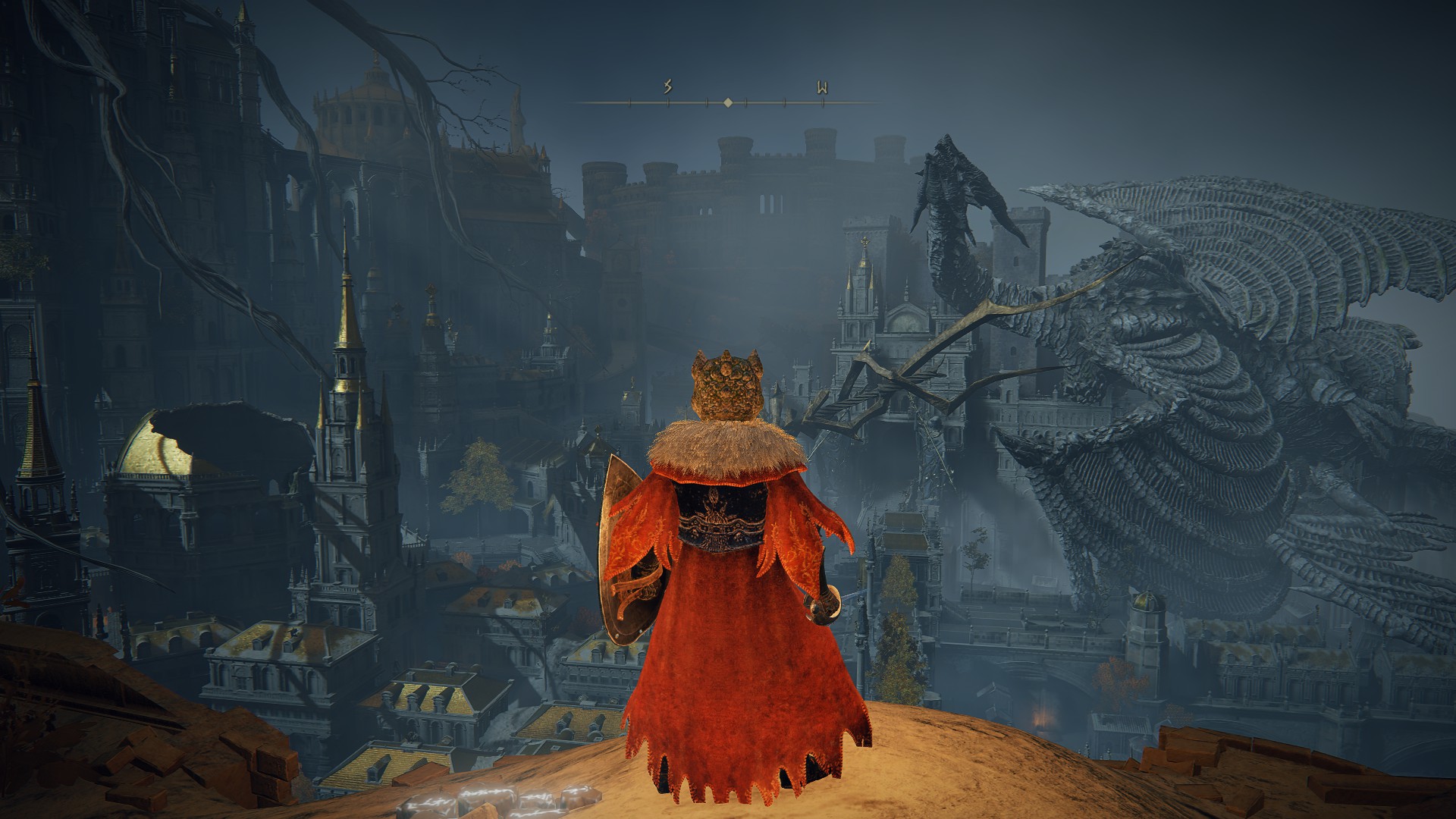
Elden Ring is an unbelievable level of detail repeated umpteen times over. Not only does Limgrave hold Stormhill and Stormveil Castle, but also a night sky beneath its soil. The Altus Plateau serves as a wide open plain ushering in the Royal Capital, but also holds coastal villages dotted with windmills. It has a recessed, shrouded Bowery of Bounty, wreathed in gold and blanketed by fog. Deformed worm-faced creatures make noises somewhere between a sob, a wretch and a giggle. Leyndell itself is not just means to the Erdtree, it is a city proper. One can parkour across rooftops, run through houses, dive through sewers.
The story of Elden Ring spoke to me the most out of all the Souls games I've played because of its concrete foundation. As an example via comparison, consider Irithyll's conquest of Anor Londo against the conflict between Rykard's forces on Mount Gelmir and Leyndell's royal guard. Dark Souls 3 tells us that this conquest happened: the juxtaposition of these areas suggests as such, and Aldrich's current state clues us into what could have happened, yet there isn't many visible signs of struggle. We are left with a world state after the fact with only suggestion as to how it occurred.
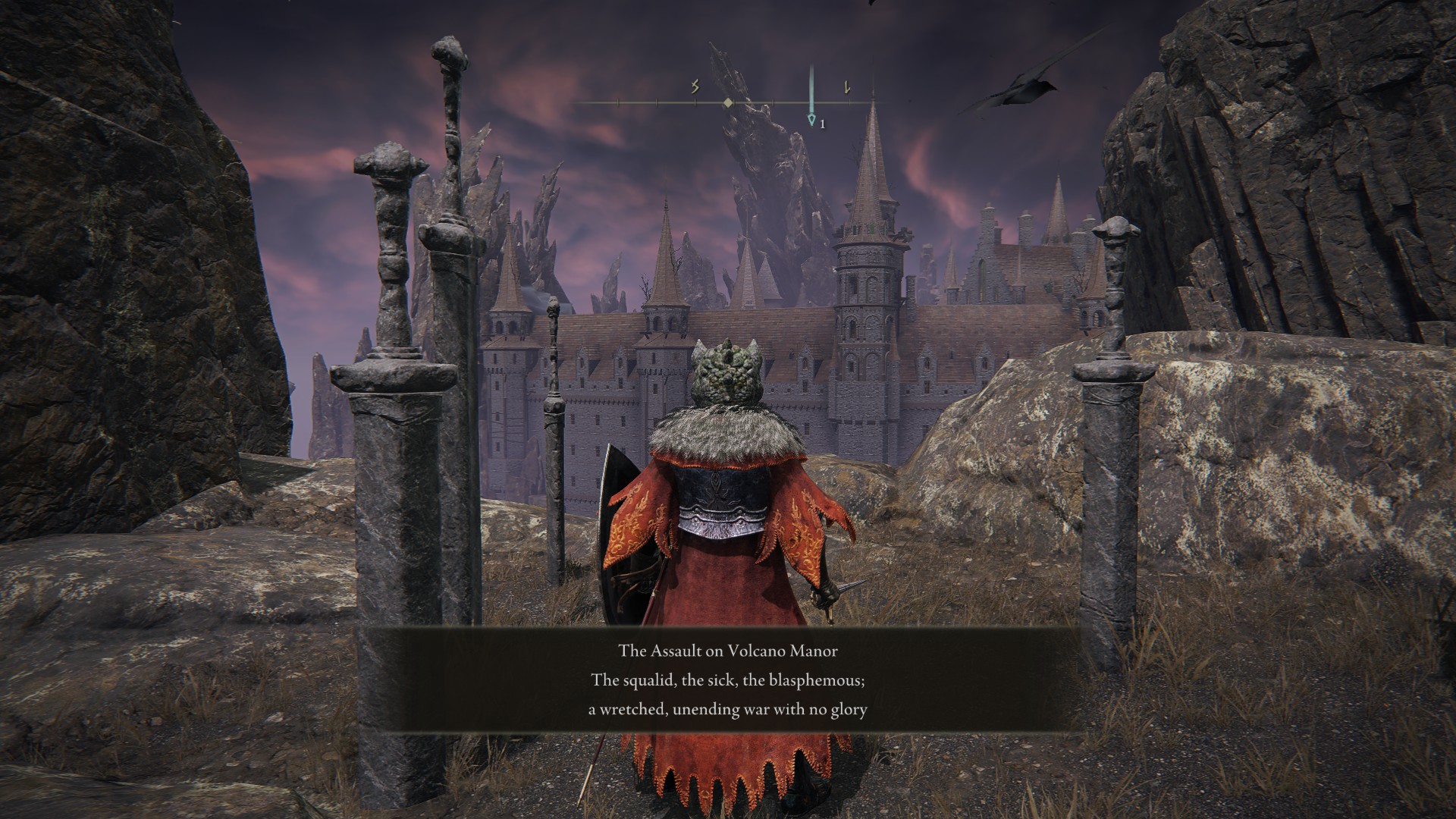
Compare this with the depiction of the war between Volcano Manor and Leyndell. The stories told about the numerous pyrrhic assaults are brought to life through the new scope of the environment. The climb up the comically-evil Mount Gelmir is littered with corpses and undead. The remains of camps lie burned and broken as carrion birds circle overhead. Once-radiant avatars of the Erdtree's influence are putrid and sickly, dulled with blood and rot. The history of the Lands Between is brought to life.
I do wish the narrative gave justa few more of these definitive answers. Why did Malenia march from Elphael to Caelid during the Shattering? What is the true nature of the one-who-is-two? Since there is so much more detail overall, those blank spaces stand out all the more.
Unfortunately, I did also feel blank spaces manifest in the game world right as I approached the end of the game. There was great novelty upon first discovering a hidden catacomb filled with still-warring ghosts on a rotting beach or discovering a ghostly, childlike jellyfish who longs for her sister. So many little lives of the Lands Between to stumble across in every pocket of the world.
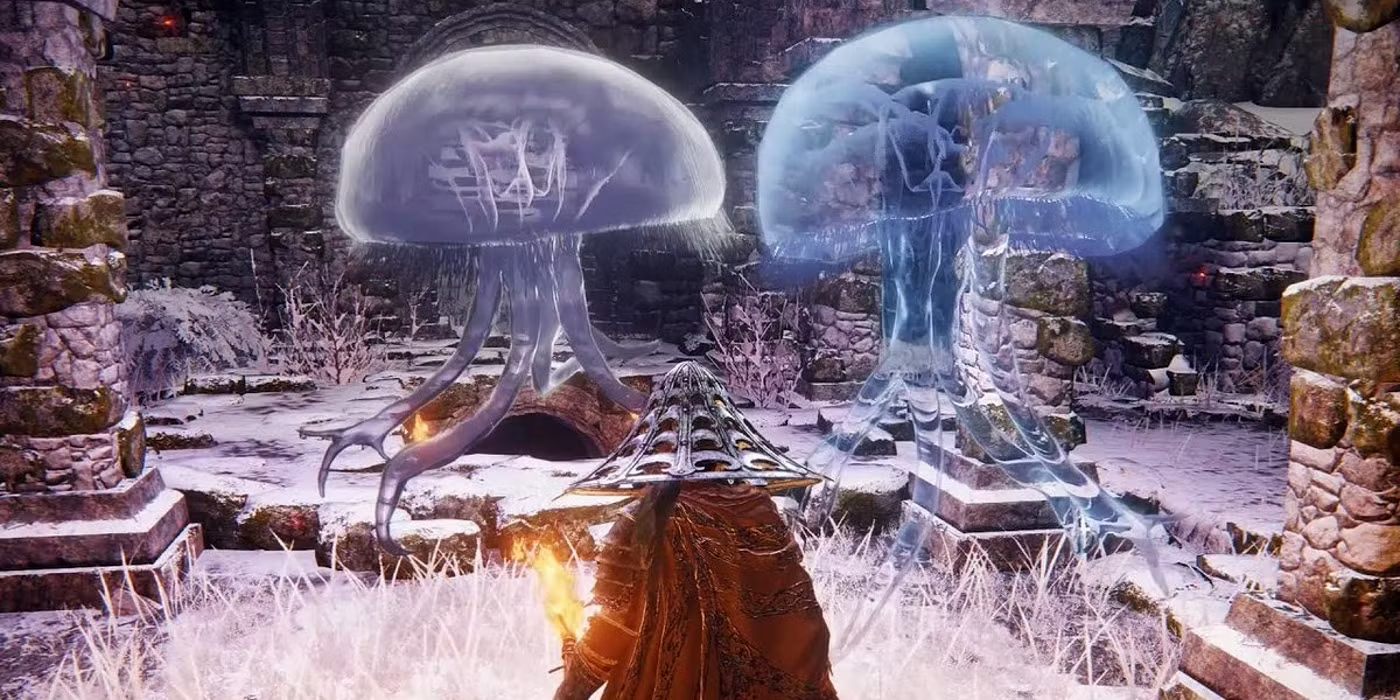
It is harder to find the same novelty in a relatively barren tundra as formerly impactful bosses exist in yet another nondescript catacomb without much justification. I did feel the magic and immersion wearing a bit thin at the very end of my journey.
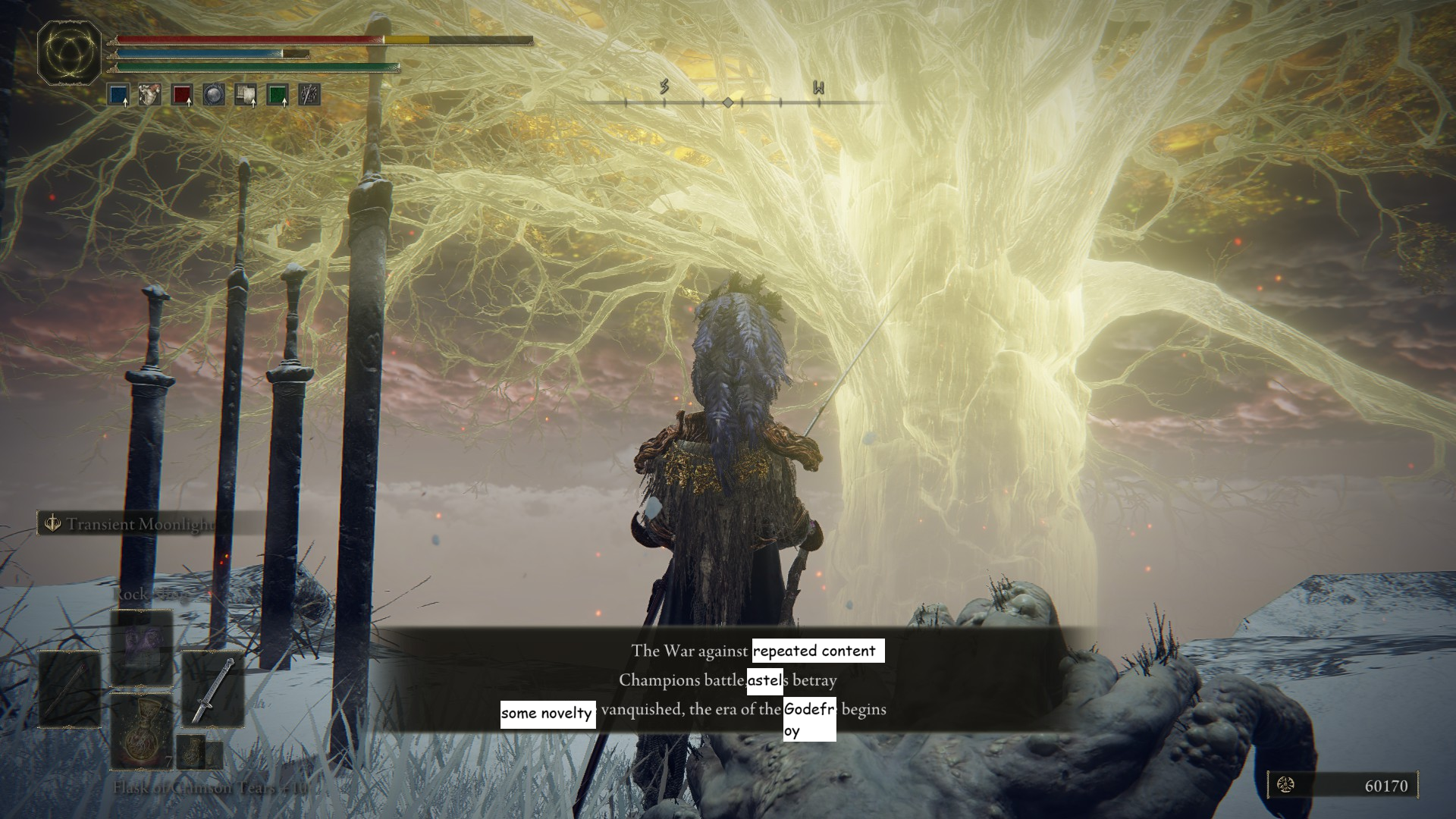
Much like DS1 and Bloodborne, I believe that Elden Ring deserves its laurels as an all-timer. It is a superb accomplishment in scope and scale and truly delivers a fantasy of strange people in an even stranger world. The Lands Between move without you-- you must move yourself to meet it. Fromsoft has given players every reason to do so.